
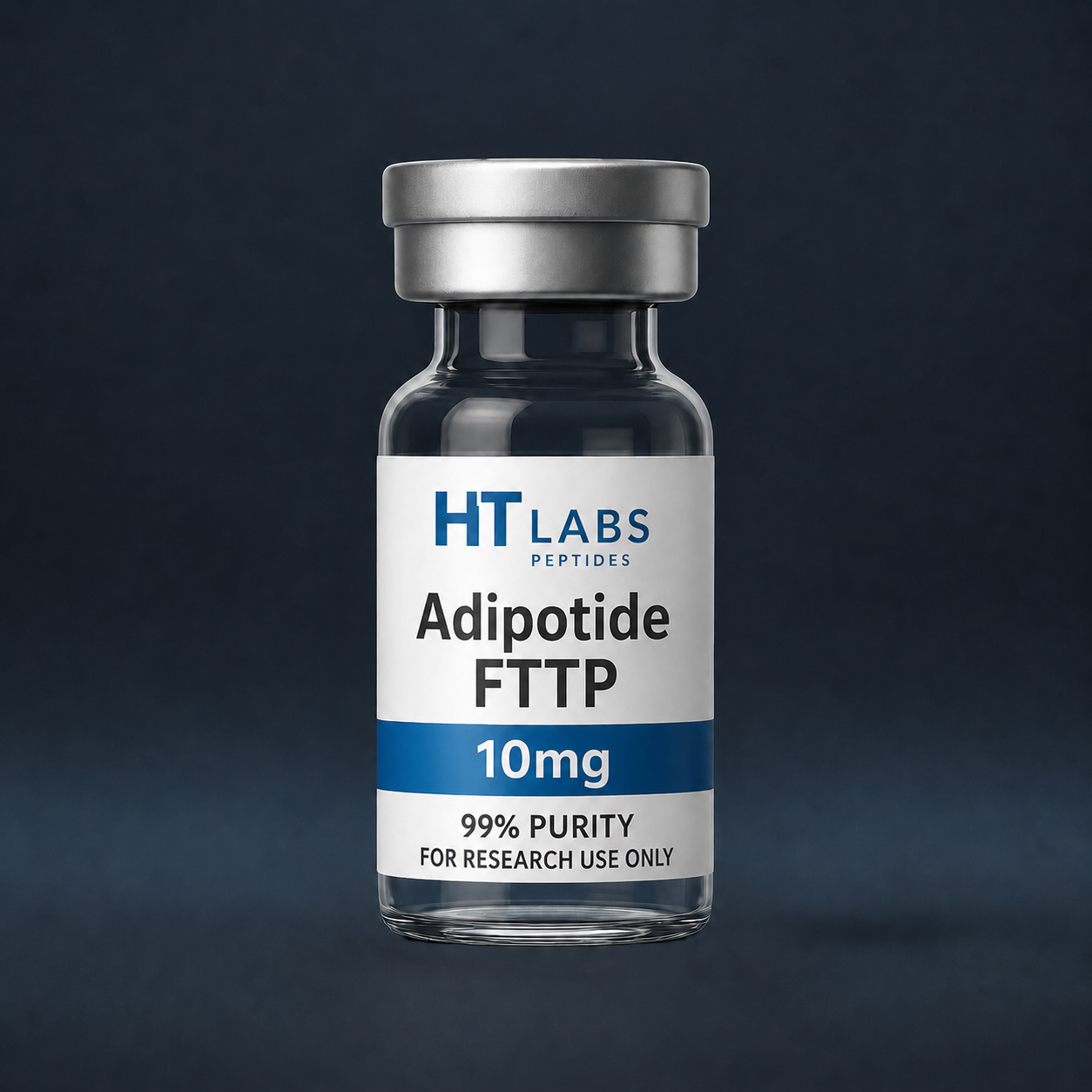
Adipotide FTTP
$70.00 – $145.00Price range: $70.00 through $145.00
Adipotide FTTP is a cutting-edge research peptide that has attracted significant attention within the scientific community for its potential role in targeted adipose tissue studies. Designed for laboratory and research applications, this peptide has become a valuable tool for investigators exploring fat metabolism, weight management mechanisms, vascular targeting, and obesity-related biological pathways.
Adipotide FTTP – Advanced Research Peptide for Targeted Fat Tissue Studies
Adipotide FTTP is a cutting-edge research peptide that has attracted significant attention within the scientific community for its potential role in targeted adipose tissue studies. Designed for laboratory and research applications, this peptide has become a valuable tool for investigators exploring fat metabolism, weight management mechanisms, vascular targeting, and obesity-related biological pathways.
Researchers continue to seek advanced compounds that provide deeper insights into adipose tissue function. Consequently, Adipotide FTTP has emerged as an important subject of investigation due to its unique mechanism of action. Unlike many conventional compounds, this peptide was specifically developed to target blood vessels that supply white adipose tissue. As a result, it offers scientists a novel approach to studying fat reduction pathways and metabolic regulation.
Whether used in preclinical investigations, metabolic research projects, or obesity-related studies, Adipotide FTTP provides a sophisticated research solution. Furthermore, its growing popularity among peptide researchers reflects the increasing demand for innovative compounds capable of supporting advanced scientific exploration.
What Is Adipotide FTTP?
Adipotide FTTP is a synthetic peptide developed for research purposes. It belongs to a category of compounds designed to selectively interact with specific cellular targets associated with adipose tissue. The peptide combines a targeting sequence with a pro-apoptotic component, allowing researchers to investigate how selective disruption of fat tissue blood supply may influence metabolic outcomes.
The unique design of Adipotide FTTP has made it particularly valuable in studies involving obesity, fat storage mechanisms, and energy balance. Moreover, its targeted approach distinguishes it from many traditional compounds used in metabolic research.
Scientists have explored this peptide in various experimental settings to better understand how adipose tissue responds to vascular disruption. In addition, researchers have investigated its potential influence on body composition, fat mass reduction, and overall metabolic activity.
Because of its specialized nature, Adipotide FTTP is intended exclusively for laboratory research and scientific investigation. Therefore, it should only be handled by qualified professionals operating within controlled research environments.
Key Features of Adipotide FTTP
Targeted Adipose Tissue Research
One of the most notable characteristics of Adipotide FTTP is its ability to target blood vessels associated with white adipose tissue. Consequently, researchers can investigate highly specific biological pathways involved in fat tissue maintenance and regulation.
Advanced Research Applications
This peptide supports a wide range of scientific studies. For example, investigators may use it to explore obesity mechanisms, metabolic adaptations, vascular biology, and energy expenditure processes.
High-Purity Research Material
Quality is essential in peptide research. Therefore, premium-grade Adipotide FTTP is manufactured according to rigorous quality control standards. Each batch is tested to ensure consistency, purity, and reliability for laboratory use.
Valuable Scientific Tool
As obesity and metabolic disorders continue to be major research priorities worldwide, Adipotide FTTP provides scientists with an innovative tool for studying complex physiological processes.
Stable Research Compound
When properly stored and handled according to laboratory guidelines, Adipotide FTTP demonstrates excellent stability. As a result, researchers can conduct studies with greater confidence and consistency.
How Adipotide FTTP Works
Adipotide FTTP was engineered to target specific receptors located on the blood vessels supplying white adipose tissue. Once these targets are identified, cellular processes may be triggered that affect the survival of those vascular structures.
Subsequently, researchers can examine how changes in adipose tissue vascularization influence fat storage, metabolic regulation, and body composition. This targeted mechanism has generated considerable scientific interest because it represents a different approach compared to traditional metabolic research compounds.
Furthermore, the peptide enables investigators to evaluate the relationship between blood vessel function and adipose tissue maintenance. Through these studies, valuable information may be obtained regarding obesity-related biological systems.
Importantly, the peptide has been utilized primarily within controlled research environments. Therefore, all investigations should be conducted according to established scientific protocols and regulatory requirements.
Research Applications of Adipotide FTTP
Obesity Research
Obesity remains one of the most significant health challenges worldwide. Consequently, researchers continue to explore novel strategies for understanding fat accumulation and storage mechanisms. Adipotide FTTP serves as a useful tool in these investigations.
Metabolic Function Studies
Scientists frequently study the relationship between adipose tissue and metabolic health. Therefore, Adipotide FTTP may be incorporated into experiments examining energy utilization, fat metabolism, and metabolic adaptation.
Vascular Biology Research
The peptide’s unique targeting mechanism allows investigators to examine vascular structures associated with adipose tissue. As a result, researchers gain valuable insights into tissue-specific blood vessel function.
Body Composition Investigations
Researchers often seek to understand how fat tissue changes over time. In addition, they examine factors influencing body composition and fat distribution. Adipotide FTTP provides an important platform for studying these processes.
Experimental Peptide Research
As peptide science continues to evolve, innovative compounds are required to support new discoveries. Therefore, Adipotide FTTP remains a subject of ongoing scientific interest across multiple research disciplines.
Benefits of High-Quality Adipotide FTTP
Selecting premium research-grade Adipotide FTTP offers several advantages for scientific investigations.
First, high-purity material helps reduce experimental variability. Consequently, researchers can obtain more reliable and reproducible results.
Second, stringent manufacturing processes ensure batch-to-batch consistency. Therefore, studies can be conducted with greater confidence in compound quality.
Third, comprehensive testing procedures verify peptide integrity before distribution. As a result, laboratories receive material that meets demanding research standards.
Additionally, proper quality assurance supports accurate data collection and interpretation. This factor is especially important when conducting advanced metabolic or obesity-related studies.
Storage and Handling Guidelines
Proper storage plays a critical role in maintaining peptide stability and research effectiveness.
For optimal preservation, Adipotide FTTP should be stored according to manufacturer recommendations. Typically, peptide materials are maintained under controlled temperature conditions to protect molecular integrity.
Furthermore, exposure to excessive heat, moisture, and direct sunlight should be minimized. These environmental factors can negatively affect peptide quality over time.
Researchers should also use sterile handling procedures whenever appropriate. Consequently, contamination risks can be reduced and sample quality preserved.
In addition, laboratory personnel should follow all established safety protocols during handling and preparation procedures.
Why Researchers Choose Adipotide FTTP
The scientific community continues to explore innovative approaches to adipose tissue research. Therefore, Adipotide FTTP has gained recognition as a valuable experimental compound.
Researchers appreciate its targeted mechanism because it enables investigation of specific biological pathways. Moreover, the peptide supports studies that may contribute to a deeper understanding of metabolic regulation and fat tissue biology.
Another reason for its popularity is the growing interest in obesity-related research. As scientific knowledge expands, advanced research tools become increasingly important. Consequently, Adipotide FTTP remains relevant across a variety of research fields.
Furthermore, the peptide’s unique design provides opportunities for exploring novel hypotheses and experimental models. This versatility enhances its value within modern research programs.
Quality Assurance and Laboratory Standards
High-quality Adipotide FTTP is produced under carefully controlled manufacturing conditions. Each production batch is evaluated to verify purity, identity, and consistency.
Additionally, analytical testing is performed to confirm product specifications before release. This process helps ensure that researchers receive dependable materials suitable for scientific investigation.
Strict quality control measures are implemented throughout manufacturing procedures. As a result, product reliability is maintained across multiple production cycles.
Researchers rely on these standards because accurate scientific outcomes depend heavily on material quality. Therefore, sourcing peptides from reputable suppliers remains essential for successful laboratory studies.
Frequently Asked Questions
What is Adipotide FTTP used for?
Adipotide FTTP is used exclusively for laboratory research involving adipose tissue, metabolic pathways, obesity mechanisms, and vascular biology investigations.
Is Adipotide FTTP intended for human consumption?
No. Adipotide FTTP is strictly intended for research purposes only and is not approved for human consumption or clinical use.
Why is purity important?
High purity minimizes unwanted variables during experiments. Consequently, researchers can achieve more accurate and reproducible results.
How should the peptide be stored?
Storage requirements may vary depending on formulation and manufacturer recommendations. Therefore, researchers should always follow the supplied handling instructions.
Who should handle this compound?
Only qualified researchers and trained laboratory professionals should handle Adipotide FTTP within controlled research environments.
Conclusion
Adipotide FTTP represents a sophisticated and highly specialized research peptide developed for advanced scientific investigation. Its targeted interaction with adipose tissue-associated vascular structures has generated substantial interest among researchers studying obesity, metabolism, and fat tissue biology.
Furthermore, the peptide offers a unique platform for exploring complex physiological mechanisms that influence body composition and metabolic regulation. Because of its innovative design, Adipotide FTTP continues to serve as a valuable research tool across multiple scientific disciplines.
When sourced from reputable suppliers and utilized according to established laboratory standards, Adipotide FTTP provides researchers with a high-quality compound capable of supporting meaningful scientific discovery. Consequently, it remains an important peptide for investigators seeking deeper insights into adipose tissue function, metabolic pathways, and obesity-related biological processes.
Research Use Only. Not for human consumption, therapeutic use, diagnosis, or treatment. Intended exclusively for qualified laboratory research and scientific investigation.
Reviews
There are no reviews yet.