
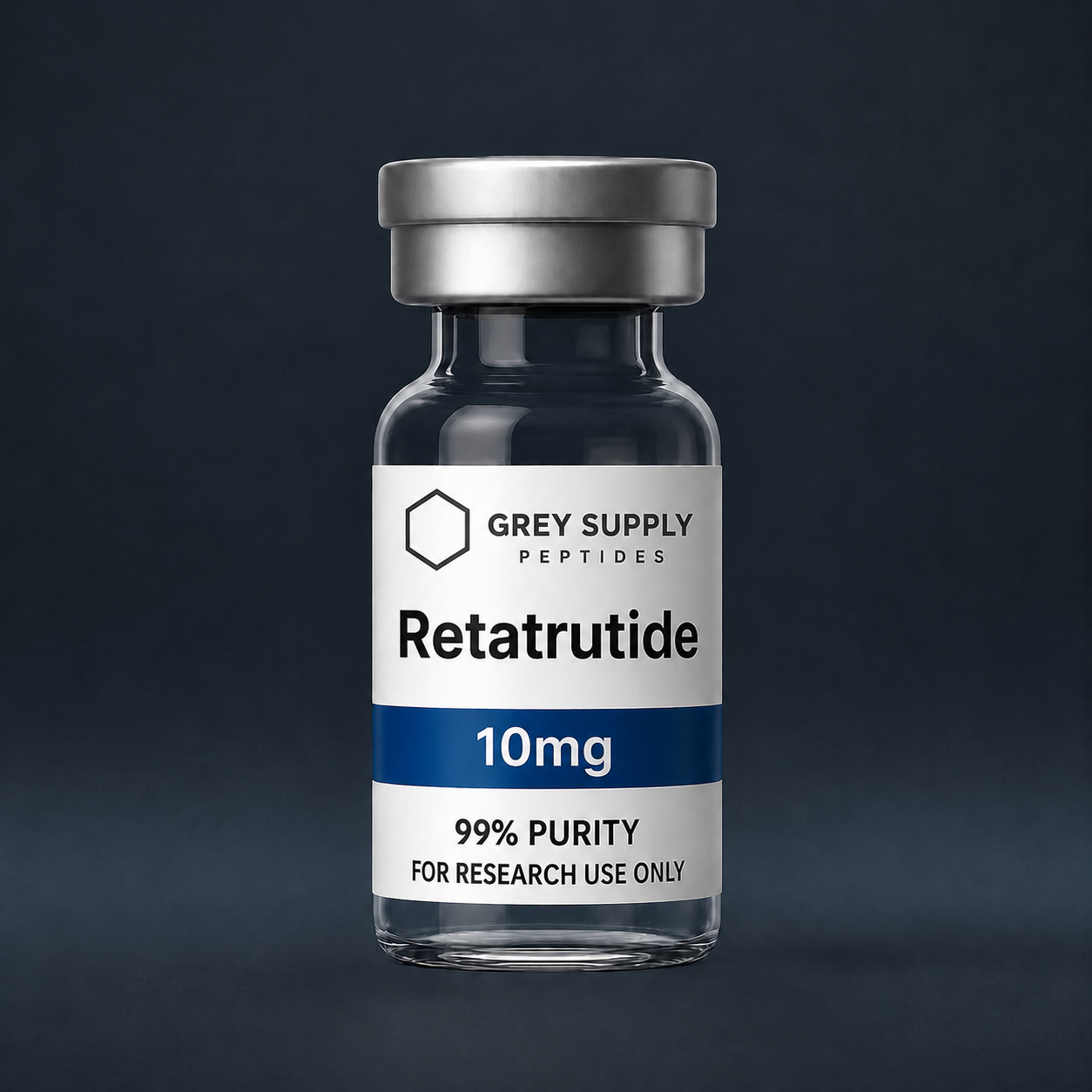
Retatrutide
Price range: $91.00 through $399.00
The landscape of metabolic research is evolving at an unprecedented pace. For years, scientists have pursued molecules capable of addressing obesity, diabetes, and hepatic steatosis through a single mechanism. However, the human endocrine system is remarkably complex, often compensating for single-receptor interventions with feedback loops that diminish efficacy. Consequently, the development of Retatrutide experimentally designated as LY3437943 represents a transformative breakthrough.
Retatrutide (LY3437943): The Triple Agonist Revolutionizing Metabolic Research
Introduction: A New Era in Peptide Science
The landscape of metabolic research is evolving at an unprecedented pace. For years, scientists have pursued molecules capable of addressing obesity, diabetes, and hepatic steatosis through a single mechanism. However, the human endocrine system is remarkably complex, often compensating for single-receptor interventions with feedback loops that diminish efficacy. Consequently, the development of Retatrutide experimentally designated as LY3437943 represents a transformative breakthrough.
Retatrutide is the first-in-class triple hormone receptor agonist. Unlike traditional therapies that target one or two pathways, this synthetic peptide simultaneously engages the GIP, GLP-1, and glucagon receptors. Therefore, it offers researchers a comprehensive tool for investigating appetite regulation, energy expenditure, and glycemic control within a single molecular framework.
Above all, Retatrutide is supplied exclusively as a lyophilized powder for *in-vitro* and preclinical research purposes. It is not approved for human therapeutic use, nor is it intended for diagnostic or veterinary applications. With that regulatory context established, let us explore the science, efficacy, and procurement details that make this peptide indispensable for modern endocrinology laboratories.
1. Mechanism of Action: The Triple Agonist Advantage
The Endocrine Trifecta
To appreciate Retatrutide’s potential, researchers must understand the three receptors it modulates. The body regulates glucose and energy balance through a network of incretin hormones. Traditionally, GLP-1 receptor agonists dominated the field, effectively slowing gastric emptying and promoting insulin secretion. Nevertheless, single agonists face limitations due to compensatory physiological responses.
Retatrutide solves this problem through concurrent receptor stimulation. Its mechanism is threefold:
– GIP Receptor Agonism: Enhances insulin secretion and improves adipose tissue metabolism. GIP also potentiates the effects of GLP-1, creating a synergistic insulinotropic response.
– GLP-1 Receptor Agonism: Provides the primary anorectic (appetite-suppressing) signal. It acts on the hypothalamus to reduce food intake while protecting pancreatic beta-cells from apoptosis. This mechanism forms the backbone of Retatrutide’s weight-loss efficacy.
– Glucagon Receptor Activation: Unlike other incretin therapies, Retatrutide activates glucagon rather than inhibiting it. As a result, this stimulates hepatic lipid oxidation and increases whole-body energy expenditure. Consequently, subjects not only consume fewer calories but also burn more energy at rest.
Pharmacokinetic Profile
In preclinical models, Retatrutide demonstrates a prolonged half-life suitable for once-weekly dosing. The peptide incorporates amino acid substitutions that enhance albumin binding, thereby reducing renal clearance. Therefore, researchers can maintain steady plasma concentrations with minimal peak-to-trough fluctuation. This stability is essential for studying dose-response relationships and minimizing variability in adverse event profiles.
Although Retatrutide remains investigational, the emerging clinical data are remarkable. In fact, this molecule has demonstrated the greatest weight reduction of any pharmacological agent currently in development.
Weight Loss Outcomes
In a randomized, double-blind, phase 2 trial, subjects receiving the highest dose (12 mg) achieved a mean weight loss of 24.2% at 48 weeks. Furthermore, at the 80-week extension, this figure reached 28.3%. For comparison, these results approach the efficacy of bariatric surgery. Consequently, Retatrutide is positioned as a potential medical alternative to invasive procedures.
Hepatic Fat Reduction
Beyond weight loss, Retatrutide shows profound effects on liver health. For instance, in subjects with non-alcoholic fatty liver disease (NAFLD), the peptide reduced absolute liver fat content by over 70%. This is particularly significant because the glucagon component directly stimulates hepatic lipid oxidation. Meanwhile, researchers are exploring the gut-liver-brain axis, and Retatrutide appears uniquely effective at crossing therapeutic thresholds for hepatic improvement.
Glycemic Control
In terms of glucose management, Retatrutide lowers HbA1c without inducing hypoglycemia. Its glucose-dependent mechanism ensures that insulin secretion occurs only when blood sugar is elevated. Therefore, for researchers investigating Type 2 Diabetes Mellitus (T2DM), this peptide offers dual benefits: substantial weight reduction and normalized glycemic index.
3. Primary Research Applications
Retatrutide serves as a versatile tool across multiple therapeutic areas. Below are the primary applications currently under investigation:
– Obesity and Metabolic Syndrome: Studying appetite suppression mechanisms and energy homeostasis.
– Type 2 Diabetes: Investigating beta-cell function restoration and insulin resistance reversal.
– Cardiovascular Protection: Examining systemic inflammation reduction and improvements in atherogenic lipid profiles.
– Non-Alcoholic Steatohepatitis (NASH): Evaluating direct glucagon effects on hepatic fibrosis and steatosis.
– Neuroscience and Reward Systems: Exploring GLP-1 receptor activation in brain reward centers to address addictive eating behaviors.
4. Product Specifications and Quality Assurance
When sourcing Retatrutide for your laboratory, purity and stability are paramount. Our product undergoes rigorous quality control to ensure research integrity.
Chemical Identity
– Molecular Formula: C₂₂₃H₃₄₆N₆₀O₆₈
– Molecular Weight: Approximately 4802.4 g/mol
– Purity: ≥ 98% (HPLC)
– Appearance: White to off-white lyophilized powder
Manufacturing Standards
Retatrutide is synthesized via solid-phase peptide synthesis (SPPS) to ensure high yield and sequence fidelity. Subsequently, the product undergoes preparative HPLC purification. Mass spectrometry (LC-MS) verifies molecular weight, while amino acid analysis confirms sequence correctness.
Quality Control Protocols
Each batch is tested for the following parameters:
1. Sterility: Confirms absence of microbial contamination.
2. Endotoxin Levels:Ensures suitability for *in-vitro* assays.
3. Heavy Metals:Guarantees no cross-contamination from equipment.
Storage and Handling
– Lyophilized Powder: Store desiccated at -20°C for up to 24 months.
– Reconstituted Solution:Stable for 14 days at 2-8°C. Avoid repeated freeze-thaw cycles.
– Solubility: Soluble in sterile water, dilute acetic acid, or DMSO.
5. Dosage Guidelines for Research
Retatrutide is typically administeredvia subcutaneous injection in animal models. For n-vitro assays, the reconstituted peptide is added directly to cell culture media.
– Reconstitution: Add sterile water to achieve desired concentration. Gently swirl (do not vortex) to dissolve the lyophilized pellet.
– Animal Dosing: Effective mouse doses range from 1–5 mg/kg, depending on study design. Dose-response curves should be established to optimize tolerance.
– In-Vitro Work: For receptor binding assays, dilute to working concentrations of 1–100 nM.
Important: Pharmacokinetics vary significantly across species. Therefore, dosage validation in your specific model is strongly advised
While Retatrutide demonstrates remarkable efficacy, researchers must remain aware of its safety profile. The triple agonist mechanism produces a more robust side effect spectrum compared to single agonists.
Common Adverse Effects
– Gastrointestinal: Transient nausea, diarrhea, and vomiting are typical of GLP-1 stimulation.
– Cardiovascular: Glucagon activation increases resting heart rate. In phase 2 trials, a mean increase of 10–15 beats per minute was observed at the 12 mg dose. Consequently, cardiovascular monitoring is recommended in long-term studies.
Rare but Serious Risks
– Pancreatitis: Though rare, amylase and lipase levels should be monitored.
– Hepatotoxicity: Beneficial hepatic fat reduction must be balanced against potential liver enzyme elevations.
Contraindications
Retatrutide should not be administered to pregnant or lactating animals, nor to models with a history of medullary thyroid cancer or Multiple Endocrine Neoplasia syndrome type 2 (MEN-2).
7. Comparative Analysis: Retatrutide vs. Semaglutide and Tirzepatide
To contextualize Retatrutide’s position in the research landscape, consider the following comparison:
| Feature | Semaglutide | Tirzepatide | Retatrutide |
| Receptor Targets | GLP-1 | GIP / GLP-1 | GIP / GLP-1 / Glucagon |
| Max Weight Loss | ~15-18% | ~20-22% | ~24-28% |
| Energy Expenditure | Low | Moderate | High |
| Heart Rate Effect | Moderate | Moderate | High |
| Liver Fat Reduction | Good | Better | Best (≥70%) |
As demonstrated, Retatrutide outperforms its predecessors in maximizing metabolic outcomes. However, the trade-off is increased cardiovascular effects, necessitating further long-term investigation. Ultimately, this peptide represents the “next step” in incretin-based therapeutics, providing researchers with a more potent tool for metabolic exploration.
8. Procurement and Regulatory Information
Supply Chain Integrity
We understand that research timelines depend on reliable supply. Therefore, we maintain substantial stock of synthesized Retatrutide for rapid dispatch. Bulk procurement options are available for large-scale institutional studies, including custom synthesis runs and specialty packaging.
Legal Disclaimer
This product is intended for professional research purposes only. It is not approved by the FDA or EMA for therapeutic use. The buyer assumes responsibility for compliance with all local and national regulations regarding controlled substances and chemical reagents.
Shipping Documentation
All shipments include a Certificate of Analysis (CoA) and Material Safety Data Sheet (MSDS). Cold-chain shipping is available upon request to ensure product integrity.
9. Frequently Asked Questions
Q: What is the shelf life of lyophilized Retatrutide?
A: When stored at -20°C, the product remains stable for up to 24 months from manufacture.
Q: Can I use Retatrutide for human injection?
A: No. This product is strictly for *in-vitro* and preclinical research. Human administration is prohibited.
Q: What quantities are available?
A: We offer standard research vials (5mg, 10mg, 50mg) and bulk quantities (1g+) for institutional studies.
Q: How should I dispose of unused material?
A: Follow institutional hazardous waste guidelines. Gloves and lab coats should be worn during handling.
10. Conclusion
In summary, Retatrutide is rewriting the scientific understanding of metabolic pharmacology. Its unique triple-agonist mechanism provides unprecedented control over appetite, energy expenditure, and glucose homeostasis—all within a single molecule. For the modern researcher, this peptide is not merely a tool; it is a gateway to uncovering fundamental biology.
Whether you are investigating hypothalamic appetite regulation, hepatic steatosis reversal, or developing novel therapeutics for the global diabetes epidemic, Retatrutide offers a high-purity, reliable solution. Consequently, we recommend this product for any laboratory seeking to remain at the forefront of endocrinology and metabolic disease research.
Be the first to review “Retatrutide”
Related products

PEPTIDE KIT

PEPTIDE KIT
Reviews
There are no reviews yet.